The short answer
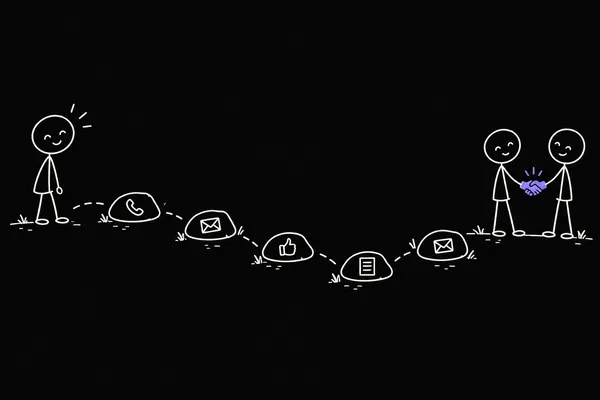
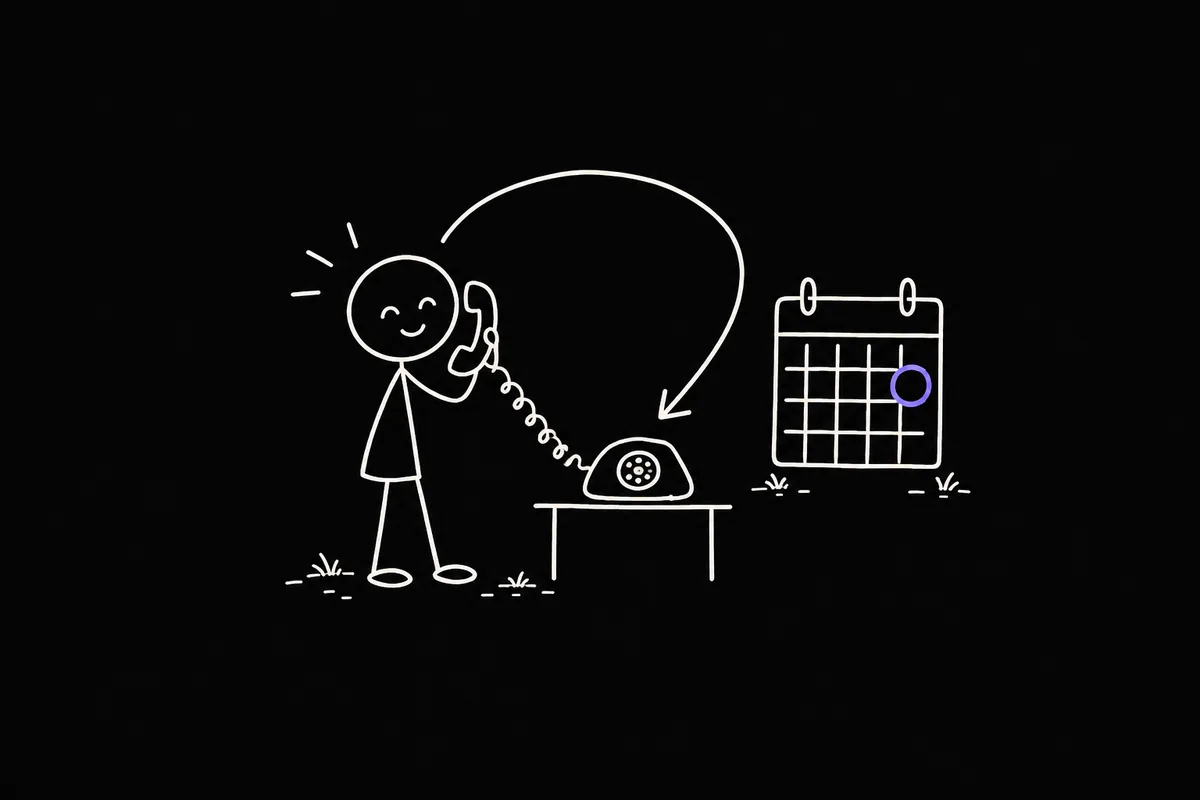
Most appointments come from callbacks because the first call is rarely the right moment. The person you need is out, busy, or hearing your name for the first time. The callback is the second conversation, at a time they chose, with some interest already in the room. Calling is pipeline building first, and pipeline management second.
That's not a theory I read. I spent 12 years in sales, including years on an automated dialler booking appointments for small businesses at a lead-generation agency in Sheffield. Looking back, I think the majority of the appointments I booked came from callbacks rather than first calls. If you only count what happens on the first dial, you're measuring the wrong half of the job.
Why the callback is where the booking happens
A cold first call has a narrow job. On the floor, my appointment-setting calls didn't run past ten minutes. The shape was simple: check the business was relevant, ask a couple of questions to test interest, then run the qualifying questions agreed with the client beforehand. No pitch. You spark enough curiosity to earn the next conversation. The pitch, if it's the right fit, comes later. It's typically a two- or three-call process.
So a lot of first calls end one of three ways:
- The person isn't there. You book a callback for another day.
- The person is there but it's a bad time. A brief conversation, then a callback at a time that suits them.
- The person is interested but not ready. They want to think, check with a partner, or look you up. Callback.
None of those is a failure. Each one is a pipeline entry. The callers who understood that ended up with diaries full of warm second conversations. The ones who treated every non-booking as a dead end were starting from cold every single morning.
What my best day actually looked like
The most appointments I ever booked in a day was nine, on roughly 300 to 400 dials on an automated dialler. It looks like a great day of first calls. It wasn't only that. A few of those nine were callbacks I'd booked on earlier days, all landing on the same date.
The rest came from being on a roll. Conversations were flowing, the objection handling was sharp, and the confidence from one booking carried into the next call. It helped that I knew the product and the technical side well, so I could talk to owners about how it fitted with the tools they already used. But the callbacks gave that day a head start before I'd made a single cold dial. That's what a pipeline does. Work you did last week pays out today.
"A first call that ends in a booked callback isn't a miss. It's next week's appointment."
How to measure a caller properly
If callbacks produce most of the bookings, judging a caller on first-call conversion alone is unfair, and it pushes the wrong behaviour. A caller chasing first-call bookings will force the pitch on people who weren't ready. A caller building a pipeline looks slow for a week, then starts booking from it.
Track these four numbers alongside dials and conversations:
- Callbacks booked. How many conversations ended with a specific time agreed for the next one.
- Callbacks kept. Of those, how many were actually made on time. If this is low, the problem is discipline or the diary, not the caller's pitch.
- Appointments from callbacks. How many bookings came from a second or third call.
- Appointments from first calls. Still worth knowing. Just not the whole story.
Look at them over a few weeks, not a day. Callbacks have a lag built in.
How to book a callback that gets kept
A vague callback ("I'll try again sometime") is barely better than nothing. A good one is specific, agreed, and written down.
- Get a better time from the gatekeeper. If the owner isn't in, ask the person who answered when is a good time to catch them. They know the diary. If they won't say, ring back in a couple of days.
- Agree a specific time with the prospect. "Thursday at ten" beats "later in the week". It gives you both something to hold to, and it goes straight in the diary.
- Note why you're calling back. What they said, what they're waiting on, who else is involved. The callback should open with their words, not a repeat of your first-call opener.
- Respect any deadline. Some campaigns have rules. On one I worked, the appointments we booked had to fall within four days, so callbacks had to fit inside that.
A callback system for a small team
On the floor, the dialler made booking callbacks easy. You don't need a dialler to get the same benefit. You need four habits.
- One place for every callback. A CRM task, or a shared sheet if that's all you have. Never a sticky note or a caller's memory. If someone is off sick, their callbacks still get made.
- A fixed callback block. Start each calling session with the callbacks due that day, before any fresh dials. They're the warmest calls you'll make.
- A standard callback note. Date and time agreed, who you spoke to, why they want a callback, and what you'll open with. Thirty seconds to write.
- A weekly review. Count callbacks booked, kept and converted for each caller. Missed callbacks are the cheapest leak to fix on any sales floor.
If you want the call flow, qualifying questions and follow-up cadence written down in one place, the free sales playbook template has a section for each.
The UK bit: callbacks still need screening
A callback doesn't sit outside the rules. This isn't legal advice, but the basics from the ICO's guidance on telephone marketing are clear. Screen your call list against the TPS and CTPS before you call. Keep your own do-not-call list of people who object. Show your number.
In practice, the dialler screened every list against the TPS and CTPS as it was loaded. A few numbers still slipped through now and then. When someone said they were on the TPS or CTPS, we left a note saying so and marked them do not contact. The same goes for anyone who says "don't call me again" on a callback. An objection made today beats a callback booked last week. There's more on the law in is cold calling dead?
The practical summary
- Treat the first call as pipeline building. Earn the next conversation, don't force the pitch.
- Judge callers on callbacks booked, callbacks kept and appointments from callbacks, not first-call conversion alone.
- Get a specific time, ideally from the gatekeeper or the prospect, and note why.
- Put every callback in one shared system and call them first, every session.
- Screen the list, honour objections, and keep a do-not-call list.
Sources: ICO, "Telephone marketing", Guide to PECR (screening against TPS and CTPS, do-not-call lists, number display). My own figures, including the nine appointments on 300 to 400 dials, are recollection, not records. Nothing here is legal advice.
Fair questions
Why do most appointments come from callbacks?
Because a first call is usually the wrong moment. The decision maker is out, busy or hearing about you for the first time. The callback is a second conversation at a time they agreed to, with some interest already there. Calling is pipeline building first and pipeline management second.
Should I judge a cold caller on first-call conversion?
Not on its own. First-call conversion ignores the callbacks a caller books and the appointments those callbacks produce later. Track callbacks booked, callbacks kept and appointments from callbacks alongside first-call bookings, then judge the whole picture over a few weeks.
What should I do when the gatekeeper says the owner isn't in?
Ask when is a better time to catch them, and book that as a callback. A specific time from the person who knows the diary beats ringing back at random. If they won't give one, try again in a couple of days.
How long should I wait before a callback?
As long as the prospect asked for, and no longer. If they gave a time, ring at that time. If not, a couple of days is a sensible default. If a campaign has a deadline, such as appointments that must fall within a few days, plan callbacks around it.
Do I need to screen callbacks against the TPS and CTPS?
Screen the whole list before you call, which covers callbacks too. If someone says they're on the TPS or CTPS, or asks not to be called, mark them do-not-call and stop. A callback booked earlier doesn't override an objection made later.