What speed to lead means
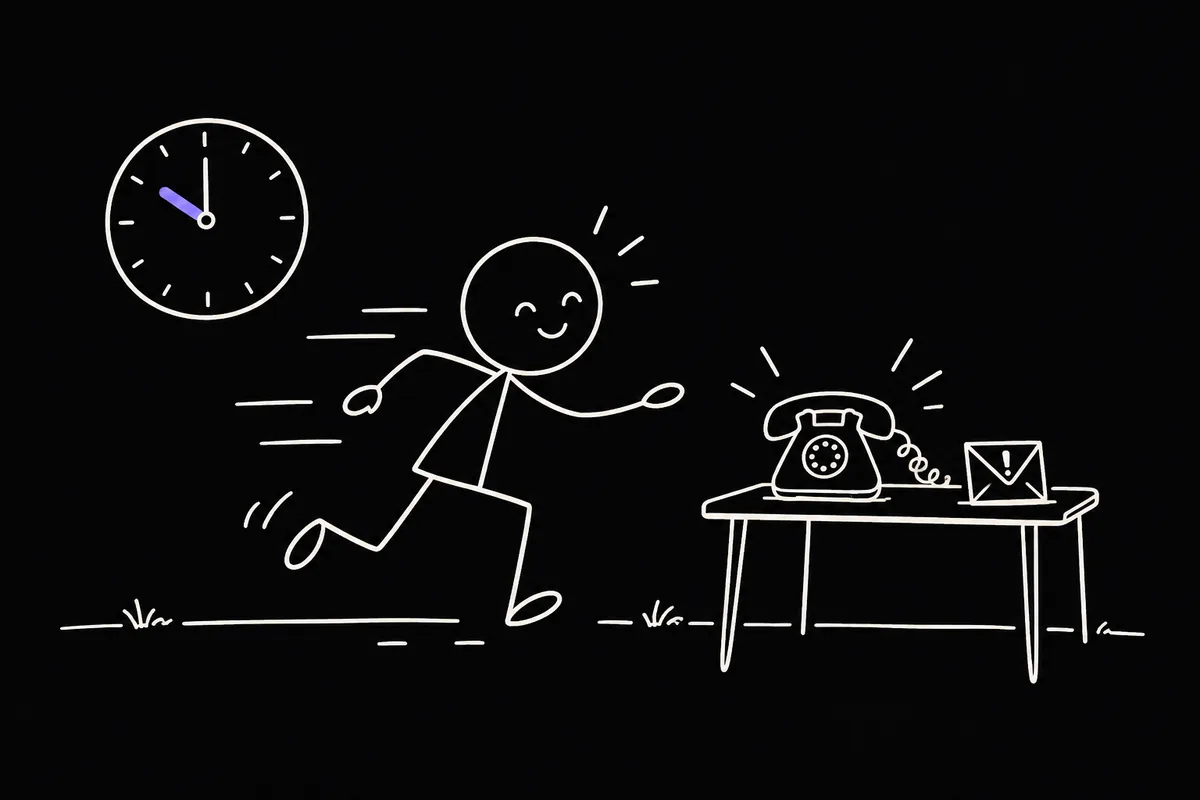
Speed to lead is the time between someone enquiring and your business making first contact. It's the cheapest fix on most sales floors because you've already paid for the lead. The research is old, but it points one way: the faster you reach a new enquiry, the more likely you are to speak to them and qualify them.
The enquiry might be a website form, a missed call, an email or a chat message. The clock starts when they reach out and stops when someone from your business has a real conversation with them. An automatic "thanks, we've got it" is useful. It doesn't stop the clock.
What the research actually says
Two studies get quoted on this more than any others. Both are worth reading properly, because the numbers get stretched every time they're repeated.
- Harvard Business Review, 2011, "The Short Life of Online Sales Leads". James Oldroyd, Kristina McElheran and David Elkington audited 2,241 US companies, timing how long each took to respond to a web-generated test lead. 37% responded within an hour. Among the companies that responded within 30 days, the average response time was 42 hours. In a separate analysis of 1.25 million leads received by 29 B2C and 13 B2B US companies, firms that contacted a lead within an hour were nearly seven times as likely to qualify it as firms that waited an hour longer, and more than 60 times as likely as firms that waited 24 hours or more.
- The InsideSales.com / MIT Lead Response Management study, 2007. Presented by Dave Elkington, then CEO of InsideSales.com, and James Oldroyd, then a faculty fellow at MIT. It used three years of data from six companies: over 15,000 web leads and over 100,000 call attempts. The odds of contacting a lead fell by over ten times in the first hour. Calling within five minutes rather than thirty, the odds of contact were 100 times higher and the odds of qualifying were 21 times higher. "Qualify" meant the lead was willing to enter the sales process, defined by each company. The study didn't look at closed sales.
Notice what these don't say. Neither claims a fast reply wins you the sale. They measure reaching the person and qualifying them, which is the step before.
The caveats
Be honest about what you're relying on.
- They're old. The data is from 2007 and 2011. Buyers now have chat, booking links and a phone that screens unknown numbers.
- They're US-based. Neither study looked at UK businesses.
- There's a vendor in both. InsideSales.com sold lead response software, and its CEO co-authored both pieces.
- They're about web leads. Mostly forms, not referrals or walk-ins.
So don't quote "100 times" as a law of nature. Take the direction, which is consistent and makes common sense: an enquiry is warmest the moment it's made, and it cools fast.
What it looked like on the floor
I spent 12 years in sales, much of it on the phones. At the outbound agency I worked at, callers could be working an inbound campaign alongside their outbound one. Inbound calls came through at random during the day, between outbound dials, and the system decided who took them. Nobody had to remember to check an inbox. The call came to whoever was free.
Later, at a vehicle-tracking firm, leads were bought in. That business spent around £15,000 a month on bought leads. When I worked the list, I put two groups first: people I'd already been in touch with, and warmer inbound leads that had just come in. Fresh enquiries went to the top because that's when people remember asking.
If you're paying for leads, every hour an enquiry waits is money you've spent and aren't using.
"You've already paid for the lead. Answering it quickly is the cheapest part."
What good looks like for a small business
You're not a call centre, and you don't need to be. A sensible standard for a small business looks like this:
- Instant acknowledgement, any hour. An automatic email or text that confirms you've got it, says who will be in touch and when.
- A call within minutes in working hours. Not "today". Minutes, while they're still at their desk and still thinking about it.
- First thing next morning out of hours. Call before you open your inbox.
- A written follow-up plan for people you can't reach. So no enquiry depends on someone's memory.
Measure it. Pull the last 20 enquiries and work out the gap between each one arriving and your first real conversation. Most owners are surprised.
Five cheap fixes
- Send an instant acknowledgement. Every form and every missed call gets an automatic reply. Keep it short: thanks, who you'll hear from, and roughly when.
- Give every enquiry a named owner. "The team" is no one. One person, or a rota, owns new enquiries each day, with a back-up when they're on a call or off.
- Call within minutes during working hours. Put notifications on the owner's phone, not just in a shared inbox. Treat a new enquiry like an inbound call, because to the person who sent it, that's what it is.
- Write a follow-up cadence. If you don't get through, plan the next tries across the next few days, mixing calls, a text and an email. Agree it once, then stop improvising. If they say no, stop.
- Let the CRM do the remembering. New enquiry in, task created, owner alerted, reminder if it's still untouched after a set time. Most CRMs can do this without custom code. If yours doesn't, that's the first thing worth fixing.
If you call people back by phone, the usual UK rules still apply to any marketing calls, including screening against the TPS and CTPS. There's more in is cold calling dead?
The practical summary
- Speed to lead is enquiry to first real conversation. Measure it on your last 20 leads.
- The best-known studies are old, US-based and vendor-linked, but consistent: faster contact means better odds of reaching and qualifying people.
- Acknowledge instantly, call within minutes in working hours, and first thing next morning out of hours.
- Give every enquiry an owner and a written follow-up cadence.
- Set the CRM to create tasks and chase you, so nothing sits waiting.
Sources: James B. Oldroyd, Kristina McElheran and David Elkington, "The Short Life of Online Sales Leads", Harvard Business Review, March 2011 (2,241 US companies; 1.25 million leads at 42 US companies). InsideSales.com and Dr James Oldroyd, Lead Response Management Study, presented 16 October 2007 (six companies, 15,000+ leads, 100,000+ call attempts; vendor research). Named as unverified and not used: "78% of customers buy from the first responder" and similar claims without a traceable source. My own experience is recollection, not records.
Fair questions
What is speed to lead?
It's the time between someone enquiring, by form, phone, email or chat, and your business making first contact with them. A quick automated "thanks, we got it" helps, but the clock that matters most is the first real conversation.
What is a good lead response time?
For a small business, aim to call within minutes during working hours and send an instant acknowledgement at any hour. Out of hours, call first thing the next working morning. The older US research found the steepest drop in contact rates within the first hour.
Is the "contact within five minutes" statistic real?
It comes from a 2007 study by InsideSales.com and an MIT faculty fellow, using 15,000+ web leads from six companies. It found the odds of contacting a lead dropped 100 times between five and thirty minutes. It's real, but it's old, US-based and vendor-run, so treat it as direction, not a promise.
Do I need software to improve speed to lead?
Not to start. A named owner for new enquiries, phone notifications and an auto-reply will fix most of it. A CRM with automatic tasks and a follow-up cadence helps once you have more than a handful of enquiries a week.
How many times should I follow up a new lead?
Enough to be sure you've tried properly, spread over a short window, using more than one channel. Write the cadence down so it doesn't depend on someone remembering. If they say no, stop.